Key Takeaways:
- Specific offers are better than open-ended ones. “I’m bringing dinner Thursday” is easier to accept than “let me know if you need anything.”
- You don’t need the perfect words. A short, honest message means more than silence.
- Understand that money and time are under real strain. Many parents cut back on work or stop working during treatment.
- Siblings need attention too. Rides, routines, and one-on-one time help brothers and sisters who don’t have cancer but whose lives have also been changed cope.
- Keep showing up. Treatment often lasts months or years, and help tends to fade after the first few weeks.
The best way to support a family whose child has cancer is to offer specific, practical help, say something simple and sincere, and keep doing both long after the diagnosis. Families rarely need grand gestures. They need dinner handled, a sibling picked up from practice, and a friend who still checks in during month six.
Why Is It So Hard to Know How to Help?
Most people freeze because they are afraid of saying the wrong thing. Parents, meanwhile, often can’t tell you what they need. The Children’s Oncology Group notes in its guide for communities that newly diagnosed families are frequently too overwhelmed to know what would help, and many feel awkward accepting it. Some describe it in five words: “I feel embarrassed getting help.”
That combination, a friend who hesitates and a parent who won’t ask, is how families end up isolated at the moment they most need people. Someone has to go first, and it should be you.

What Should You Say to a Parent Whose Child Has Cancer?
Keep it short and true. Did you know it’s okay to admit that you have no idea what to say? It’s true. Showing up with honesty and good intentions goes a long way. In fact, clinicians at Children’s Health in Dallas add that many parents find apologies difficult to hear and respond better to statements of solidarity.
Instead of this
Say this
“Let me know if you need anything.”
“I’m dropping off dinner Thursday. Any foods to avoid?”
“I know how you feel.”
“I can’t imagine what this is like. I’m here.”
“Everything happens for a reason.”
“This is so unfair. I’m thinking about all of you.”
“Stay positive!”
“However you’re feeling today is okay.”
“My cousin had cancer and…”
“Tell me about how [child’s name] doing, if you feel like talking.”
“Have you tried…?”
“It sounds like you have a good team.”
Two more habits help. Add “no need to reply” to your texts so a message never becomes a chore, and follow the parent’s lead on how much to discuss. Some days they may want to talk about scans and test results, and some days they may want to talk about anything else.
What Practical Help Do Families Need Most?
Pediatric oncologists quoted by the American Cancer Society give the same advice again and again: skip the open-ended offer, name a concrete task, and then do it. Good options include:
- Meals. Ask about dietary restrictions first, and use containers that don’t need to be returned.
- Rides. School drop-offs, sports practice, and activities for siblings.
- Household tasks. Lawn care, laundry, pet care, grocery runs.
- Gift cards. Gas, groceries, and food delivery are the most useful.
- Coordination. Free tools such as CaringBridge let one person organize meals and errands so the family isn’t fielding dozens of texts.
Financial help deserves special mention. In a U.S. survey of caregivers of children with cancer, 17% said their household had lost more than 40% of its income. A 2025 paper in Supportive Care in Cancer points to earlier studies in which as many as 94% of families saw a parent’s job disrupted in some way.
In short? A gas card can matter more than flowers.

How Can You Help Siblings of a Child with Cancer?
Siblings often get lost in the shuffle. Less time with parents and not knowing what is happening rank among the stresses the American Cancer Society lists for siblings. Friends and relatives can protect a sibling’s normal routine by getting them to practices and playdates.
Beyond logistics, give siblings attention that has nothing to do with cancer. Show up at their game. Ask about their week first. Remember their birthday.
How Can Coworkers, Employers, and Schools Help?
Workplaces have more power than they realize. Studies show that flexible work arrangements and social support are tied to how well families held up financially. If you manage a parent in this situation, flexibility with schedules and remote work is one of the most valuable things you can offer. Coworkers can cover shifts or pick up projects without being asked.
Teachers and school staff can help a child in treatment stay connected to class, and help siblings who may be struggling quietly. Our guide to 504 plans and IEPs during cancer treatment explains how schools can support students.
What Should You Avoid When a Child You Know Has Cancer?
- Don’t visit when you’re sick. Children in treatment can have weakened immune systems. Ask before any visit, and stay home with even a mild cold.
- Never post or share without permission. Never share a child’s diagnosis, photos, or updates on social media unless the parents have said it’s okay.
- Refrain from offering medical advice. Articles, supplements, and miracle stories add pressure. The family has a care team.
- Avoid making them manage your feelings. It’s fine to be sad. Lean on someone outside the family for that.
- Don’t disappear. Awkward and present is better than polished and absent.
How Do You Keep Helping After the First Few Weeks?
Support usually floods in at diagnosis and thins out within a month or two, while treatment continues much longer. Research summarized by the Children’s Oncology Group links support from friends and extended family to better adjustment among mothers and more optimism among caregivers.
A few ways to make your help last:
- Put a recurring reminder on your calendar to check in.
- Pick one task and own it for the long haul, such as Tuesday carpool.
- Remember the hard dates: scan days, hospital stays, the anniversary of diagnosis.
- Keep inviting them to things, even if they decline every time.
- Stay close after treatment ends. Relief and worry often arrive together.
The holidays are a good time to start. Families in treatment may be juggling appointments, travel limits, and tight budgets while everyone around them celebrates.
How Does Cure 4 The Kids Foundation Support Families?
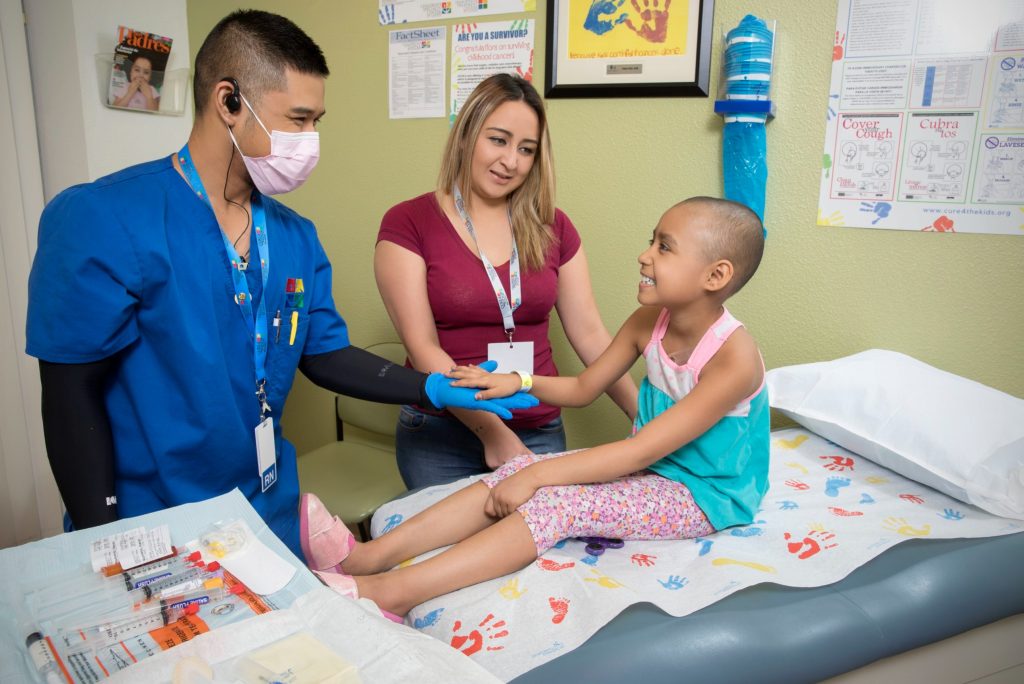
Family support is built into care at Cure 4 The Kids Foundation. Through its behavioral health services, child life specialists help patients understand and cope with treatment and offer education and support for parents and siblings. Social workers connect families with local and national resources and help arrange transportation to appointments. These services are for current C4K patients.
Other support includes the on-site Learning Center, which keeps patients connected to school, and the Charity Care Program, which ensures no child with cancer is ever turned away for financial reasons.
How Can You Help Families at C4K?
If you don’t know a family personally, you can still help the ones being treated in Nevada:
- Give. Donations support care for children with cancer and rare diseases.
- Shop the wish list. C4K keeps an online wish list of items for patients.
- Volunteer. C4K welcomes volunteers for special events throughout the year. Clinic volunteers must be at least 19.
- Donate blood. Many children in treatment rely on donated blood and platelets.
- Stream a song. This holiday season, every stream of C4K’s single “Do They Know It’s Christmas?” sends proceeds to children fighting cancer and rare diseases.
Frequently Asked Questions About Supporting a Family Whose Child Has Cancer
What do you say to a parent whose child has cancer?
Something short and sincere, such as “I’m thinking of you and I’m here.” You don’t need to fix anything.
What should you not say to a family facing childhood cancer?
Avoid platitudes like “everything happens for a reason,” comparisons to other people’s cancer, and medical advice.
What's a good gift for a family whose child has cancer?
Gift cards for gas, groceries, and food delivery are the most practical. Ask before sending food or flowers.
Is it okay to ask how the child is doing?
Yes. Ask gently and let the parent decide how much to share.
Should I visit a child who is in cancer treatment?
Only with the parents’ permission, and never when you are sick.
How can I help from far away?
Send gift cards, order a meal delivery, mail a card to the child or a sibling, and keep texting.
Does my child need an eye exam if their eyes seem fine?
Yes. Uveitis in children with JIA usually has no symptoms until it has caused damage, which is exactly why screening exams are scheduled regardless of how the eyes look or feel.
Does this advice apply to families facing a rare disease or other serious illness?
Yes. The same approach helps any family caring for a seriously ill child.

About the Author: Annette Logan-Parker brings over 30 years of experience in pediatric oncology and rare disease to her role as Founder and Chief Advocacy & Innovation Officer at Cure 4 The Kids Foundation. She has dedicated her career to improving outcomes for children with cancer and rare diseases, including ensuring equitable access to cutting-edge treatments for all families.