What Is an Orphan Drug? A Guide for Families Facing a Rare Disease

Key Takeaways:

  • An orphan drug treats a rare disease. In the United States, that means a condition affecting fewer than 200,000 people.
  • Most rare diseases still have no approved treatment. About 95% of rare diseases lack an FDA-approved therapy, which is why each new approval matters so much to the families waiting for it.
  • Approval takes years of advocacy, funding, and persistence. The law that made orphan drugs possible exists because patients and parents pushed for it.
  • An approved drug still has to reach the child who needs it. Many orphan drugs require a treatment site with trained clinical staff, pharmacy support, and monitoring.
  • Cure 4 The Kids Foundation is a site where orphan drugs can be administered. Children with rare diseases in Nevada, and sometimes from neighboring states, can receive these therapies at C4K’s treatment center in Las Vegas.

An orphan drug is a medication or biologic developed to treat, diagnose, or prevent the progression of a rare disease, defined in the United States as a condition affecting fewer than 200,000 people. The FDA grants orphan drug designation to encourage companies to develop treatments for small patient populations that would otherwise be overlooked.

If your child has been diagnosed with a rare disease, you may hear this term from a physician, a pharmacist, or an insurance company. Here is what it means and why it matters for your family.

Why Are They Called “Orphan” Drugs?

The name comes from the diseases themselves. For decades, conditions that affected small numbers of people were called “orphan diseases” because no one was developing treatments for them. Bringing a drug to market is expensive, and a company could not expect to recover that cost from a few thousand patients.

Families changed that. In the late 1970s and early 1980s, parents and patients organized and pressed Congress to act. The result was the Orphan Drug Act of 1983, a law that researchers describe as a product of grassroots patient advocacy. Before it passed, only 38 drugs for rare diseases had been approved in the United States. The same advocates went on to found the National Organization for Rare Disorders.
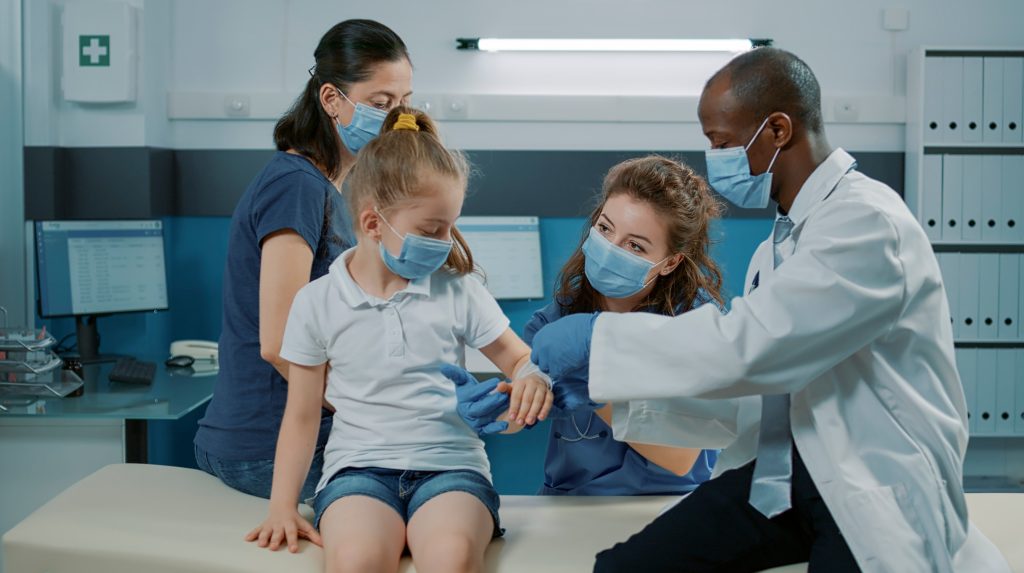
Child with a bleeding disorder being supported by her pediatric care team

How Does a Drug Get Orphan Status?

A company developing a treatment for a rare disease can ask the FDA for orphan drug designation. If the request is granted, the company qualifies for incentives that make the work more financially realistic:

  • Tax credits for qualified clinical trials
  • Exemption from certain FDA fees
  • The potential for seven years of market exclusivity after approval

Designation and approval are two separate steps. Designation happens during development. To be approved, an orphan drug goes through the same scientific review for safety and effectiveness as any other medication.

Why Is an Orphan Drug Approval Such a Big Deal?

More than 10,000 rare diseases affect over 30 million Americans, and nearly 70% of them begin in childhood. About 95% have no FDA-approved treatment. For most families, a rare diagnosis comes with a care plan focused on managing symptoms, because nothing exists yet to treat the disease itself.

Every approval changes that for one group of patients, and none of them happen quickly. Clinical trials are hard to run when only a few hundred people in the country have a condition. Patient organizations often raise research money themselves, build registries of affected families, and spend years making their case to researchers, companies, and lawmakers. An orphan drug approval usually represents a decade or more of that work.

The pace has picked up. In 2025, half of the FDA’s novel drug approvals (23 of 46) had orphan drug designation, including new treatments for hemophilia and Barth syndrome. In February 2026, Congress reauthorized the Rare Pediatric Disease Priority Review Voucher program through September 2029, renewing an incentive aimed specifically at treatments for children.
Why Are Orphan Drugs So Expensive?

Development costs are spread across a small number of patients, so the price per patient is high. The median annual list price for medicines launched in 2024 was more than $350,000, and rare disease therapies ran higher.

List price is rarely what a family pays. Insurance coverage, prior authorization, manufacturer assistance programs, and nonprofit foundations all play a part, and sorting through them takes time and expertise. Coverage varies from plan to plan, which is one reason the treatment site a family works with matters.

How Are Orphan Drugs Given?

Some orphan drugs are pills or liquids taken at home. Many others are infusions or injections that need to be given in a clinical setting by nurses trained in that specific therapy. These drugs may require special storage and preparation, careful dosing by weight, and monitoring during and after each visit.

This means an approved drug is only useful to a child if there is a place within reach that can administer it. Where a family lives still shapes their options. NORD’s most recent State Report Card found that access to rare disease care continues to depend heavily on geography, and an earlier NORD survey found that nearly 40% of rare disease patients traveled more than 60 miles for medical care.

A patient at Cure 4 The Kids Foundation receiving an infusion in the organization's infusion suite

Where Can Children in Nevada Receive Orphan Drugs?

Cure 4 The Kids Foundation is Nevada’s only dedicated outpatient pediatric cancer and rare disease treatment center, and it is a site where orphan drugs can be administered. Our infusion center, on-site pharmacy, and pediatric specialists in hematology, oncology, and rheumatology are in one location in Las Vegas.

For families in Southern Nevada, that can mean receiving a specialized therapy close to home instead of traveling to another state for every dose. Our reach also extends past the state line. Patients from many other states are referred to us for treatment.

When a physician prescribes an orphan drug, our team works with the family, the insurer, and the manufacturer to look for a way to bring that treatment to the child. These cases are often complicated, and we take them on one at a time.

What Should You Do If Your Child Needs an Orphan Drug?

Start with your child’s rare disease specialist. Ask whether an FDA-approved treatment exists for the diagnosis, whether any clinical trials are open, and where the treatment can be given.

If you are a parent or a referring provider and want to know whether a therapy can be administered at Cure 4 The Kids Foundation, call us at (702) 732-1493. You can also visit our referring providers page to learn more about our specialists.

Frequently Asked Questions About Orphan Drugs

An orphan drug is a medicine made to treat a rare disease. In the United States, a disease is considered rare when it affects fewer than 200,000 people.

Some are, and some are still in development. Orphan drug designation is a status granted while a drug is being studied. The drug must still pass the FDA’s full review for safety and effectiveness before it can be prescribed.

About 5%. Roughly 95% of the more than 10,000 known rare diseases have no FDA-approved therapy.

The cost of research and development is divided among a small number of patients. Insurance, manufacturer assistance programs, and nonprofit support often reduce what families pay.

Cure 4 The Kids Foundation is a site where orphan drugs can be administered. Whether a specific therapy is available depends on your child’s diagnosis and treatment plan, so the best first step is to call us or ask your child’s physician to send a referral.

Yes. Families are referred by a provider. Call 702-732-3330 to learn more about the referral process.

About the Author: Annette Logan-Parker brings over 30 years of experience in pediatric oncology to her role as Founder and Chief Advocacy & Innovation Officer at Cure 4 The Kids Foundation. She has dedicated her career to improving outcomes for children with cancer and ensuring equitable access to cutting-edge treatments for all families.

Neurofibromatosis in Children: What Nevada Families Should Know

Key Takeaways:

  • Neurofibromatosis is a group of genetic conditions. They cause tumors to grow along nerves. Most of these tumors are benign, but they need careful watching.
  • NF1 is the most common type. It affects roughly 1 in every 2,660 babies, and about half of those children have no family history of the condition.
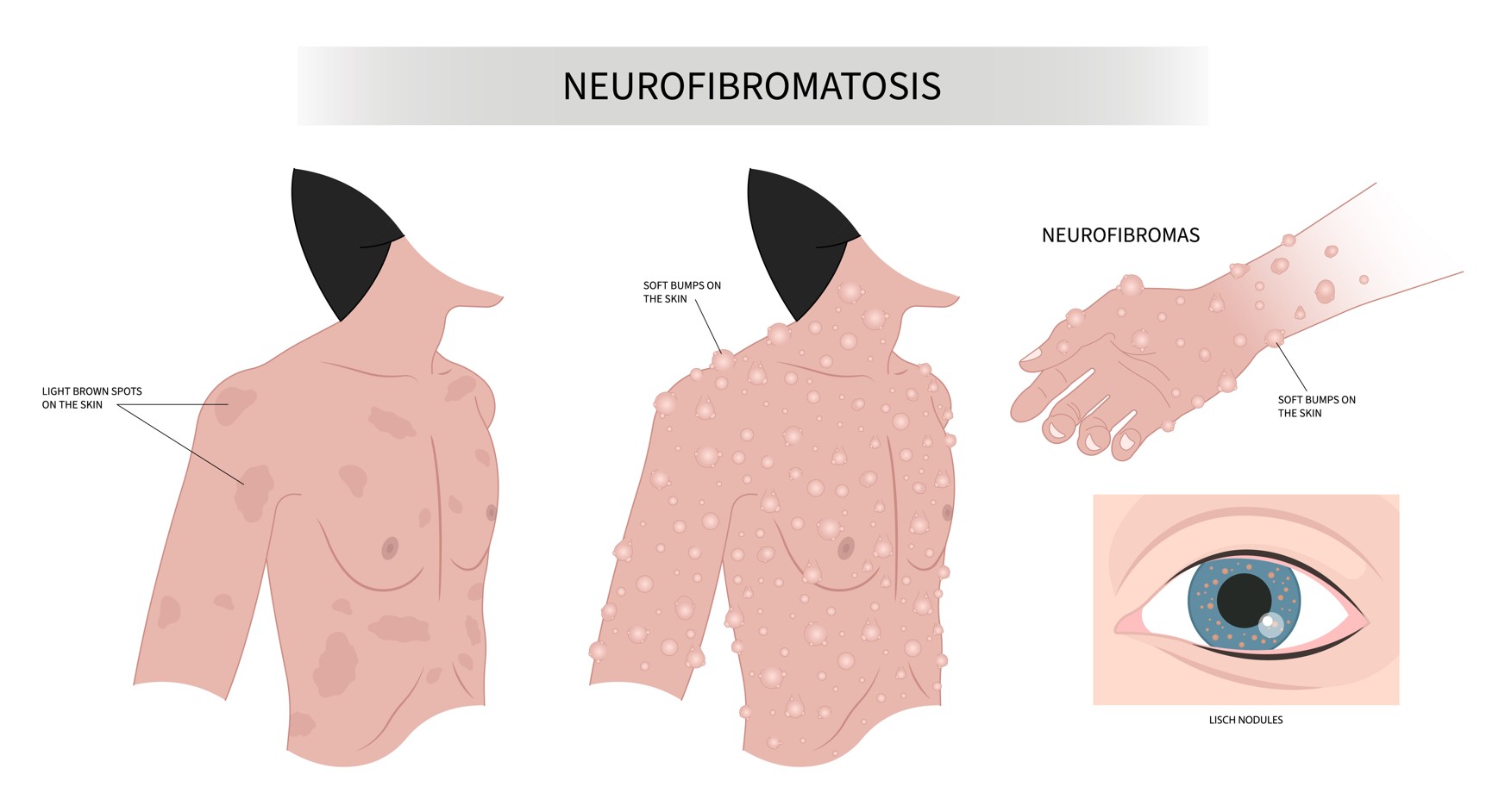
  • The first signs usually appear on the skin. Flat, light brown patches called café-au-lait spots often show up in the first years of life.
  • Monitoring is a central part of care. Regular exams and eye checks help a care team catch changes early, when there are more options.
  • Treatment has advanced. Two FDA-approved medications can now shrink certain NF1 tumors that cannot be safely removed with surgery.
  • Specialized care is available in Las Vegas. The Neuro-Oncology Multidisciplinary Clinic at Cure 4 The Kids Foundation cares for children with NF1 and NF2.

What Is Neurofibromatosis?

Neurofibromatosis (NF) is a group of genetic conditions that cause tumors to grow on nerves in the skin, brain, spinal cord, and other parts of the body. Most of these tumors are benign, meaning they are not cancer, but they can cause problems depending on where they grow. The most common form, neurofibromatosis type 1 (NF1), is usually diagnosed in early childhood and calls for monitoring throughout life.

NF1 on adult hand

What Are the Types of Neurofibromatosis?

There are two types families hear about most often.

Neurofibromatosis type 1 (NF1) is by far the most common. It affects the skin, nerves, eyes, and bones, and its signs usually appear in early childhood.

NF2-related schwannomatosis is the condition long known as NF2. It typically causes tumors on the nerves responsible for hearing and balance, and it is often found in the teen or young adult years. In 2022, an international group of experts updated the name and diagnostic criteria, retiring the term “neurofibromatosis 2” to make diagnoses more precise. Many families and providers still say NF2, so you may hear both names.

How Common Is Neurofibromatosis?

NF1 is one of the more common genetic conditions. A 2023 analysis of studies from around the world estimated that NF1 occurs in about 1 in every 2,660 births, while NF2 is far rarer, at roughly 1 in 50,000 births.

NF1 can be passed from a parent to a child, and a parent with NF1 has a 50% chance of passing it on with each pregnancy. About half of children with NF1, though, are the first in their family to have it, because the gene change happened on its own.

An illustration of NF1 symptoms

What Are the Signs of NF1 in Children?

Doctors diagnose NF1 using a set of criteria that were revised by an international panel in 2021 to reflect advances in genetics, eye care, dermatology, and imaging. A child who has two or more of these features generally meets the criteria: 

  • Six or more café-au-lait spots (flat, light brown patches on the skin)
  • Freckling in the armpits or groin
  • Two or more neurofibromas (soft bumps on or under the skin), or one plexiform neurofibroma (a larger tumor that grows along a nerve)
  • A tumor on the optic pathway, the nerves that carry signals from the eyes to the brain
  • Small, harmless spots on the iris or specific changes at the back of the eye, found during an eye exam
  • Distinctive bone changes
  • A genetic test showing a change in the NF1 gene
  • A parent who has NF1

Many of these signs appear with age, so a young child may have only skin spots at first. One or two café-au-lait spots are common in children who do not have NF. If your child has several, their pediatrician can help decide whether an evaluation makes sense.

Why Is NF1 Called a Tumor Predisposition Syndrome?

NF1 changes a gene that normally helps control cell growth. When that gene does not work as it should, tumors are more likely to form over time. Two kinds matter most in childhood.

Plexiform neurofibromas. These tumors grow along nerves and affect about half of people with NF1. They can cause pain or affect how a part of the body works, and a small number become cancerous, which is one reason regular monitoring matters.

Optic pathway gliomas. These slow-growing tumors develop in 15% to 20% of children with NF1, most often before age 5, and a little over a third of them go on to cause symptoms. Regular eye exams help a care team spot the ones that need treatment.

Because tumor growth is at the center of NF1, ongoing care is often led by a neuro-oncology team, whose training is in monitoring and treating tumors of the nervous system.

A nurse holds a tablet with a rare disease patient

Does NF1 Affect Learning and Attention?

It can. The American Academy of Pediatrics notes that most children with NF1 grow and develop within the typical range. Learning and attention differences are common, though. A 2026 review found that cognitive and behavioral difficulties affect up to 70% of children and teens with NF1. A separate analysis of 70 studies found that children with NF1 have notably more ADHD symptoms than their peers, inattention in particular. 

Knowing this early helps. A neuropsychological evaluation can identify where a child needs support, and families can use those results to request school accommodations.

How Is Neurofibromatosis Treated?

There is no cure for NF yet, so care focuses on watching closely and treating problems as they arise. Many children need only regular monitoring for years at a time.

When a tumor causes symptoms, options depend on its type and location. Some tumors can be removed with surgery. Plexiform neurofibromas often wrap around nerves and other structures, which makes complete removal difficult.

For those tumors, medication is now an option. Selumetinib, approved by the FDA in 2020, was the first therapy approved for children with this kind of tumor. In long-term follow-up of the trials behind that approval, 70% of the 74 children enrolled saw their tumors shrink by at least 20%, along with lasting improvement in pain. In February 2025, the FDA approved a second medication, mirdametinib, for patients age 2 and older after a trial in which 52% of the children who took it had their tumors shrink.

These medications are not right for every child, and they carry side effects that need monitoring. Your child’s care team can explain whether one makes sense for your family.

A doctor speaks with a rare disease family

Who Should Manage a Child’s NF Care?

NF1 touches many parts of a child’s health, so care works best when specialists coordinate. The American Academy of Pediatrics publishes health supervision guidance for children with NF1 that calls for regular visits and eye exams through childhood. In releasing that guidance, the AAP noted that children can benefit from evaluation at a center with NF expertise that works alongside their pediatrician. 

Where Can Nevada Families Find Care for Neurofibromatosis?

At Cure 4 The Kids Foundation, children with NF1 and NF2 are cared for through the Neuro-Oncology Multidisciplinary Clinic in Las Vegas. The clinic is led by Dr. Sumit Gupta, Director of Neuro-Oncology. It is listed in the Neurofibromatosis Network’s national directory of NF clinics.

During a single visit of about two hours, families may meet with a pediatric neuro-oncologist, clinical neuropsychologist, genetic counselor, clinical pharmacist, and physical therapist. Any imaging or specialty referrals are arranged before you leave. If part of your child’s care takes place elsewhere, such as surgery, our neuro-oncology team continues to coordinate the plan so your family always has one place to turn with questions.

Frequently Asked Questions About Neurofibromatosis

No. NF is a genetic condition that causes tumors to grow on nerves, and most of those tumors are benign. A small number can become cancerous, which is why regular monitoring is part of care.

Sometimes. A parent with NF1 has a 50% chance of passing it to each child. About half of children with NF1 have no family history, because the gene change occurred on its own.

There is no cure today. Care focuses on monitoring and on treating symptoms as they come up, and FDA-approved medications can now shrink some NF1 tumors that cannot be removed with surgery.

No. One or two spots are common in children without NF. Six or more is one of the features doctors look for, and a diagnosis generally requires at least two features. However, when in doubt, refer to a neuro-oncologist like Dr. Gupta at Cure 4 The Kids Foundation. A specialist can determine whether or not your child has neurofibromatosis.

Neurofibromatosis has a genetic cause, but ongoing care centers on monitoring and managing tumor growth. That work fits a neuro-oncology team, whose expertise is in tumors of the brain and nervous system.

Yes. Families are referred by a provider. Call 702-732-3330 to learn more about the referral process.

About the Author: Annette Logan-Parker brings over 30 years of experience in pediatric oncology to her role as Founder and Chief Advocacy & Innovation Officer at Cure 4 The Kids Foundation. She has dedicated her career to improving outcomes for children with cancer and ensuring equitable access to cutting-edge treatments for all families.