Neurofibromatosis in Children: What Nevada Families Should Know

Key Takeaways:

  • Neurofibromatosis is a group of genetic conditions. They cause tumors to grow along nerves. Most of these tumors are benign, but they need careful watching.
  • NF1 is the most common type. It affects roughly 1 in every 2,660 babies, and about half of those children have no family history of the condition.
  • The first signs usually appear on the skin. Flat, light brown patches called café-au-lait spots often show up in the first years of life.
  • Monitoring is a central part of care. Regular exams and eye checks help a care team catch changes early, when there are more options.
  • Treatment has advanced. Two FDA-approved medications can now shrink certain NF1 tumors that cannot be safely removed with surgery.
  • Specialized care is available in Las Vegas. The Neuro-Oncology Multidisciplinary Clinic at Cure 4 The Kids Foundation cares for children with NF1 and NF2.

What Is Neurofibromatosis?

Neurofibromatosis (NF) is a group of genetic conditions that cause tumors to grow on nerves in the skin, brain, spinal cord, and other parts of the body. Most of these tumors are benign, meaning they are not cancer, but they can cause problems depending on where they grow. The most common form, neurofibromatosis type 1 (NF1), is usually diagnosed in early childhood and calls for monitoring throughout life.
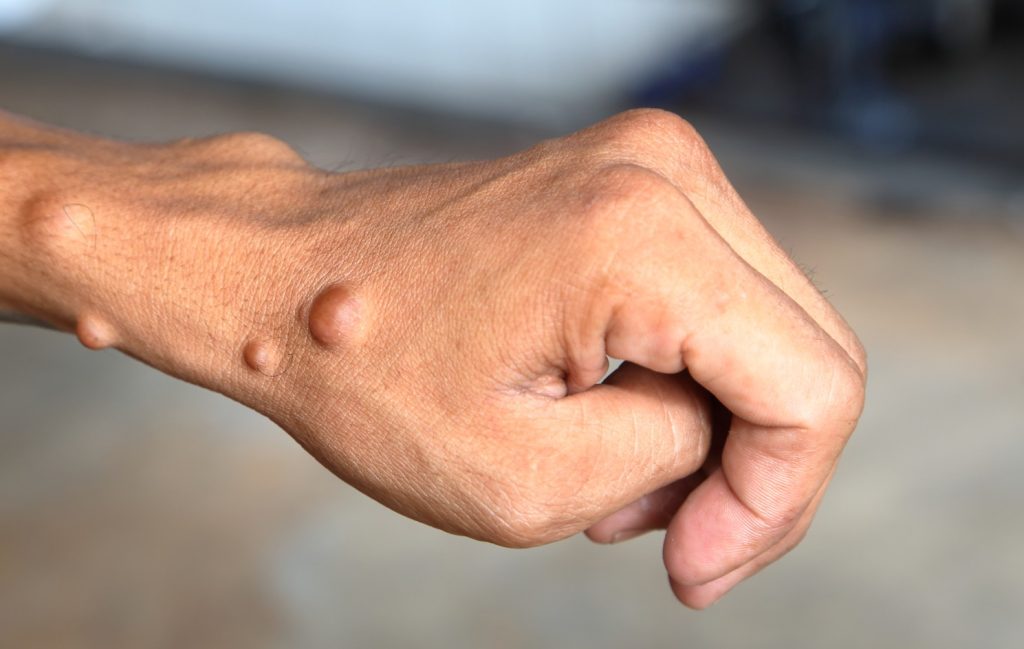
NF1 on adult hand

What Are the Types of Neurofibromatosis?

There are two types families hear about most often.

Neurofibromatosis type 1 (NF1) is by far the most common. It affects the skin, nerves, eyes, and bones, and its signs usually appear in early childhood.

NF2-related schwannomatosis is the condition long known as NF2. It typically causes tumors on the nerves responsible for hearing and balance, and it is often found in the teen or young adult years. In 2022, an international group of experts updated the name and diagnostic criteria, retiring the term “neurofibromatosis 2” to make diagnoses more precise. Many families and providers still say NF2, so you may hear both names.

How Common Is Neurofibromatosis?

NF1 is one of the more common genetic conditions. A 2023 analysis of studies from around the world estimated that NF1 occurs in about 1 in every 2,660 births, while NF2 is far rarer, at roughly 1 in 50,000 births.

NF1 can be passed from a parent to a child, and a parent with NF1 has a 50% chance of passing it on with each pregnancy. About half of children with NF1, though, are the first in their family to have it, because the gene change happened on its own.
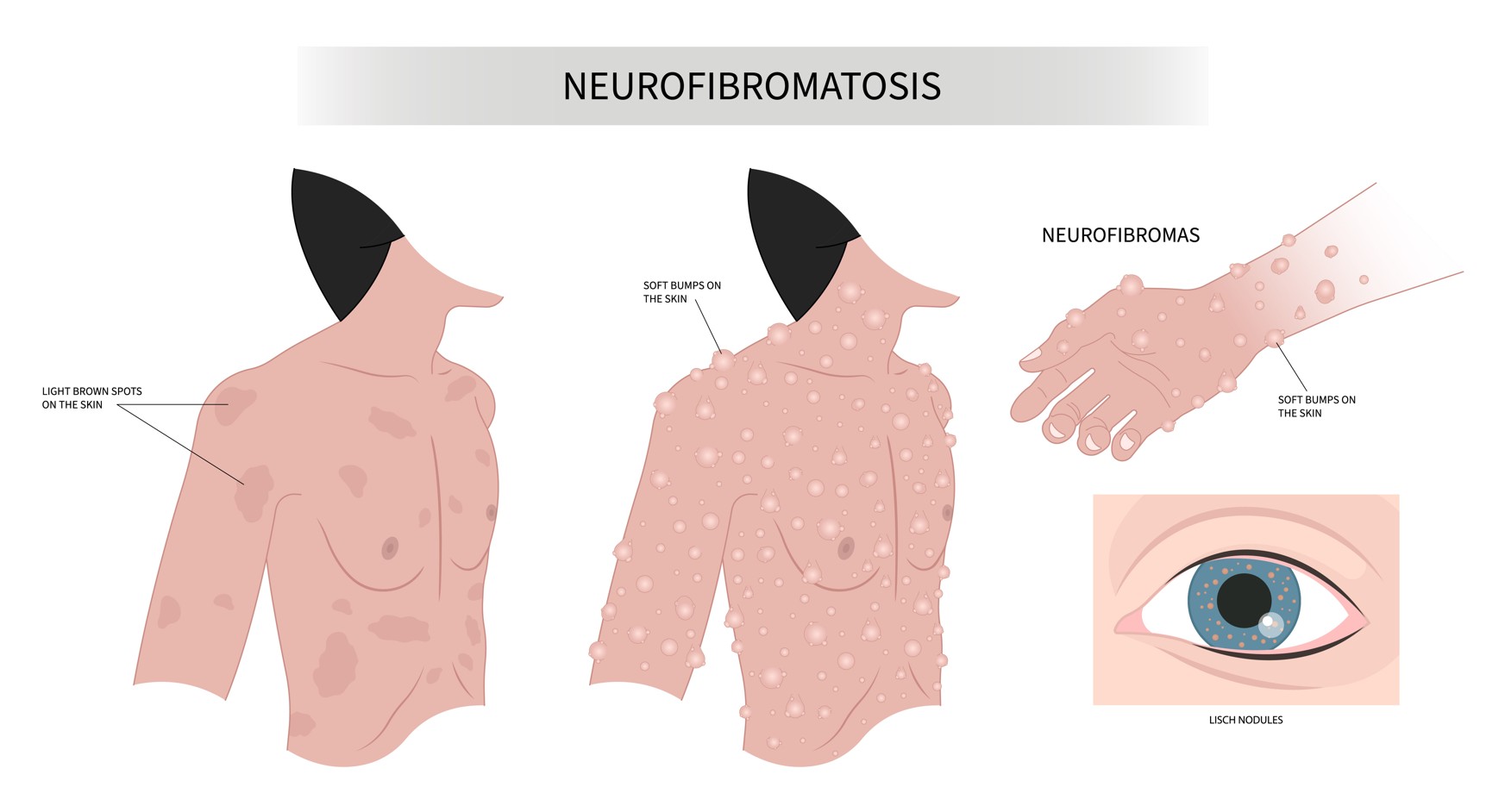
An illustration of NF1 symptoms

What Are the Signs of NF1 in Children?

Doctors diagnose NF1 using a set of criteria that were revised by an international panel in 2021 to reflect advances in genetics, eye care, dermatology, and imaging. A child who has two or more of these features generally meets the criteria: 

  • Six or more café-au-lait spots (flat, light brown patches on the skin)
  • Freckling in the armpits or groin
  • Two or more neurofibromas (soft bumps on or under the skin), or one plexiform neurofibroma (a larger tumor that grows along a nerve)
  • A tumor on the optic pathway, the nerves that carry signals from the eyes to the brain
  • Small, harmless spots on the iris or specific changes at the back of the eye, found during an eye exam
  • Distinctive bone changes
  • A genetic test showing a change in the NF1 gene
  • A parent who has NF1

Many of these signs appear with age, so a young child may have only skin spots at first. One or two café-au-lait spots are common in children who do not have NF. If your child has several, their pediatrician can help decide whether an evaluation makes sense.

Why Is NF1 Called a Tumor Predisposition Syndrome?

NF1 changes a gene that normally helps control cell growth. When that gene does not work as it should, tumors are more likely to form over time. Two kinds matter most in childhood.

Plexiform neurofibromas. These tumors grow along nerves and affect about half of people with NF1. They can cause pain or affect how a part of the body works, and a small number become cancerous, which is one reason regular monitoring matters.

Optic pathway gliomas. These slow-growing tumors develop in 15% to 20% of children with NF1, most often before age 5, and a little over a third of them go on to cause symptoms. Regular eye exams help a care team spot the ones that need treatment.

Because tumor growth is at the center of NF1, ongoing care is often led by a neuro-oncology team, whose training is in monitoring and treating tumors of the nervous system.
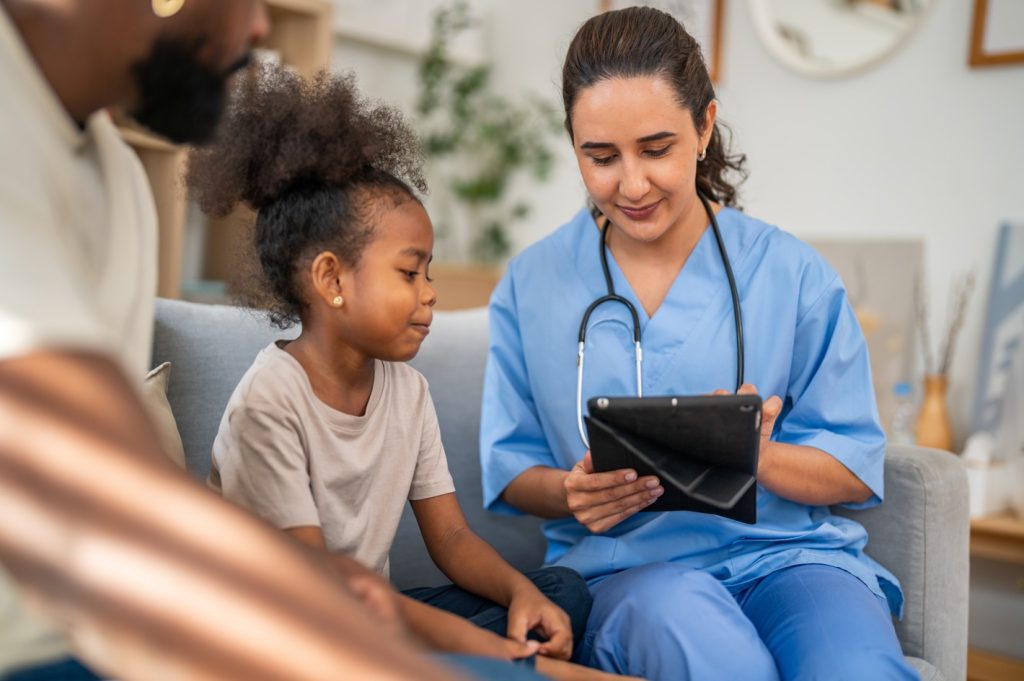
A nurse holds a tablet with a rare disease patient

Does NF1 Affect Learning and Attention?

It can. The American Academy of Pediatrics notes that most children with NF1 grow and develop within the typical range. Learning and attention differences are common, though. A 2026 review found that cognitive and behavioral difficulties affect up to 70% of children and teens with NF1. A separate analysis of 70 studies found that children with NF1 have notably more ADHD symptoms than their peers, inattention in particular. 

Knowing this early helps. A neuropsychological evaluation can identify where a child needs support, and families can use those results to request school accommodations.

How Is Neurofibromatosis Treated?

There is no cure for NF yet, so care focuses on watching closely and treating problems as they arise. Many children need only regular monitoring for years at a time.

When a tumor causes symptoms, options depend on its type and location. Some tumors can be removed with surgery. Plexiform neurofibromas often wrap around nerves and other structures, which makes complete removal difficult.

For those tumors, medication is now an option. Selumetinib, approved by the FDA in 2020, was the first therapy approved for children with this kind of tumor. In long-term follow-up of the trials behind that approval, 70% of the 74 children enrolled saw their tumors shrink by at least 20%, along with lasting improvement in pain. In February 2025, the FDA approved a second medication, mirdametinib, for patients age 2 and older after a trial in which 52% of the children who took it had their tumors shrink.

These medications are not right for every child, and they carry side effects that need monitoring. Your child’s care team can explain whether one makes sense for your family.
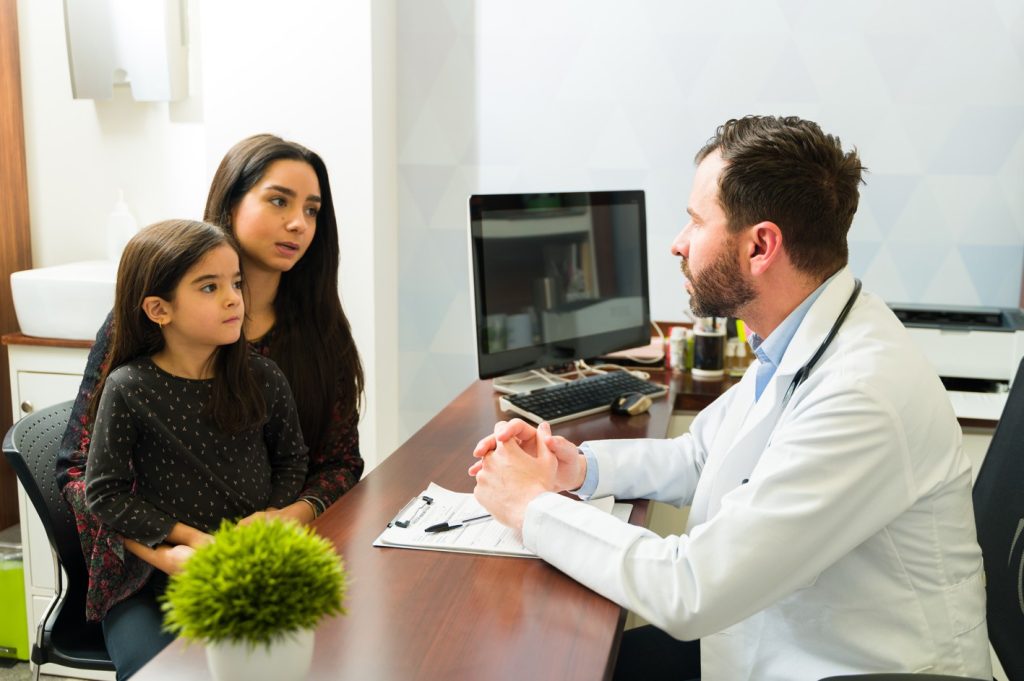
A doctor speaks with a rare disease family

Who Should Manage a Child’s NF Care?

NF1 touches many parts of a child’s health, so care works best when specialists coordinate. The American Academy of Pediatrics publishes health supervision guidance for children with NF1 that calls for regular visits and eye exams through childhood. In releasing that guidance, the AAP noted that children can benefit from evaluation at a center with NF expertise that works alongside their pediatrician. 

Where Can Nevada Families Find Care for Neurofibromatosis?

At Cure 4 The Kids Foundation, children with NF1 and NF2 are cared for through the Neuro-Oncology Multidisciplinary Clinic in Las Vegas. The clinic is led by Dr. Sumit Gupta, Director of Neuro-Oncology. It is listed in the Neurofibromatosis Network’s national directory of NF clinics.

During a single visit of about two hours, families may meet with a pediatric neuro-oncologist, clinical neuropsychologist, genetic counselor, clinical pharmacist, and physical therapist. Any imaging or specialty referrals are arranged before you leave. If part of your child’s care takes place elsewhere, such as surgery, our neuro-oncology team continues to coordinate the plan so your family always has one place to turn with questions.

Frequently Asked Questions About Neurofibromatosis

No. NF is a genetic condition that causes tumors to grow on nerves, and most of those tumors are benign. A small number can become cancerous, which is why regular monitoring is part of care.

Sometimes. A parent with NF1 has a 50% chance of passing it to each child. About half of children with NF1 have no family history, because the gene change occurred on its own.

There is no cure today. Care focuses on monitoring and on treating symptoms as they come up, and FDA-approved medications can now shrink some NF1 tumors that cannot be removed with surgery.

No. One or two spots are common in children without NF. Six or more is one of the features doctors look for, and a diagnosis generally requires at least two features. However, when in doubt, refer to a neuro-oncologist like Dr. Gupta at Cure 4 The Kids Foundation. A specialist can determine whether or not your child has neurofibromatosis.

Neurofibromatosis has a genetic cause, but ongoing care centers on monitoring and managing tumor growth. That work fits a neuro-oncology team, whose expertise is in tumors of the brain and nervous system.

Yes. Families are referred by a provider. Call 702-732-3330 to learn more about the referral process.

About the Author: Annette Logan-Parker brings over 30 years of experience in pediatric oncology to her role as Founder and Chief Advocacy & Innovation Officer at Cure 4 The Kids Foundation. She has dedicated her career to improving outcomes for children with cancer and ensuring equitable access to cutting-edge treatments for all families.
The Role of Pediatric Oncology Nurses: More Than Medical Care

Key Takeaways:

  • Pediatric oncology nurses are often the most consistent presence on a child’s cancer care team. They administer chemotherapy and other treatments, monitor for side effects, educate families on what to expect, and provide emotional support throughout the treatment process.
  • Specialized training matters when a child has cancer. Pediatric oncology nurses complete education and clinical training beyond standard nursing licensure. One widely recognized standard is the Pediatric Chemotherapy and Biotherapy Provider Program from the Association of Pediatric Hematology/Oncology Nurses (APHON), a two-part certification that pairs a course and exam with hands-on clinical competency validation. 
  • The nurse’s role extends well beyond clinical tasks. Pediatric oncology nurses help families understand complex diagnoses, teach caregivers how to manage symptoms at home, coordinate with social workers and child life specialists, and serve as a bridge between the medical team and the family.
  • Children are not small adults, and their nursing care reflects that. Pediatric oncology nurses are trained to adjust their communication, assessment techniques, and care approach based on a child’s age, developmental stage, and emotional needs. 
  • At Cure 4 The Kids Foundation, every nurse meets the standard of APHON’s Pediatric Chemotherapy and Biotherapy Provider Program, earning it before they join or completing it on the job here, and specializes in complex and chronic infusion therapy for children, adolescents, and young adults.

A pediatric oncology nurse is a registered nurse who specializes in caring for children, adolescents, and young adults diagnosed with cancer. These nurses are trained to administer complex cancer treatments, monitor patients for complications, educate families throughout the treatment process, and provide emotional and psychosocial support to both the child and their caregivers. Pediatric oncology nurses work as part of a multidisciplinary care team alongside oncologists, nurse practitioners, social workers, child life specialists, and other professionals.

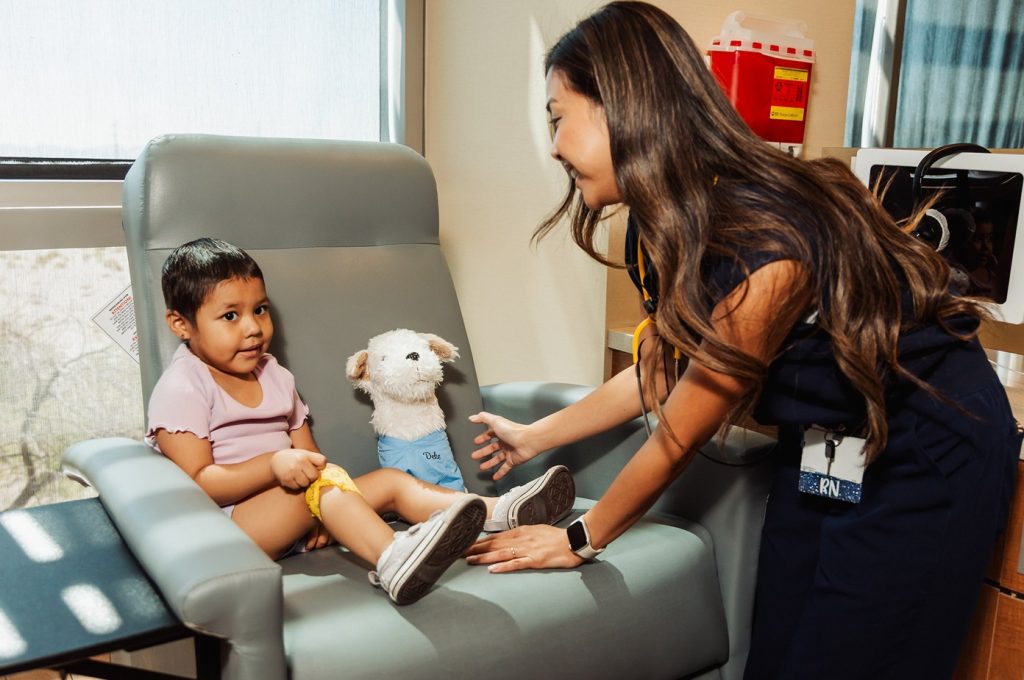
A pediatric oncology nurse with a patient at Cure 4 The Kids Foundation

What Do Pediatric Oncology Nurses Do?

When a child is diagnosed with cancer, much of the attention understandably focuses on the oncologist directing the treatment plan. But families quickly learn that nurses are the team members they see most often, spend the most time with, and rely on most heavily during the day-to-day reality of treatment.

Pediatric oncology nurses are responsible for a wide range of clinical and supportive care tasks. On the clinical side, they administer chemotherapy, immunotherapy, and other infusion-based treatments. They:

  • Monitor vital signs
  • Watch for early indicators of complications such as infection, allergic reactions, or changes in blood counts
  • Manage symptoms like nausea, pain, and fatigue that often accompany cancer treatment
  • Serve as a critical safety checkpoint, verifying medications, assessing how a child is tolerating treatment, and communicating changes to the oncology team in real time.

But the role goes far beyond the infusion chair.

Pediatric oncology nurses spend significant time with families, answering questions, demonstrating home care procedures, and helping caregivers recognize signs that warrant a call to the clinic. For a parent whose child was healthy just weeks ago, learning to flush a central line, track a temperature log, or identify the early signs of neutropenic fever can feel overwhelming. Nurses are typically the ones walking families through each of these steps, often more than once, with patience and without judgment. 

Clinical Services

Why Does Specialized Training Matter in Pediatric Oncology Nursing?

Not all nursing is the same, and pediatric oncology nursing requires a distinct set of skills that goes beyond general pediatric or adult oncology experience.

Children’s bodies respond to cancer and cancer treatment differently than adults’ bodies do. Drug dosages are calculated differently. Side effects can present differently. And the emotional needs of a three-year-old undergoing chemotherapy are nothing like those of a teenager receiving the same class of medication. Pediatric oncology nurses are trained to recognize these differences and adjust their approach accordingly, from how they assess pain in a nonverbal toddler to how they talk with an adolescent about hair loss or missing school.

One of the most recognized training standards in the field is the Pediatric Chemotherapy and Biotherapy Provider Program, administered by the Association of Pediatric Hematology/Oncology Nurses (APHON). Earning this provider certification is a two-part process. First, a nurse completes a formal course and passes an exam covering the knowledge required to safely administer chemotherapy and biotherapy to pediatric patients. Second, the nurse completes on-the-job training and is evaluated for clinical competency in a real care setting. Both the knowledge component and the hands-on competency validation are required to become a certified provider, and an active registered nursing license is required to enter the program. 

At Cure 4 The Kids Foundation, this certification is the standard held for every member of the nursing team. Some nurses arrive already certified. Those who join without the credential complete the full process here, the course, the exam, and the clinical competency validation, so that every nurse on the team meets the same standard of training in administering infusion therapy to children, adolescents, and young adults.

How Do Pediatric Oncology Nurses Support Families Emotionally?

A childhood cancer diagnosis affects the entire family. Parents are processing fear, grief, and uncertainty. Siblings may feel confused or left out. And the child at the center of it all is trying to make sense of an experience that no child should have to face.

Pediatric oncology nurses are uniquely positioned to provide emotional support because of the time they spend with families and the trust they build over weeks, months, and sometimes years of treatment. Research has shown that nurses are often the healthcare professionals who comfort families after difficult news, help children and parents process fear and disappointment during treatment, and serve as a consistent, familiar presence during an unpredictable time. 

At Cure 4 The Kids Foundation, this support is not separate from clinical care. It is woven into it. A nurse who notices that a child has become withdrawn may flag a concern to the behavioral health team. A nurse who recognizes that a parent is struggling to absorb discharge instructions may slow down, repeat the information, or arrange a follow-up call. These moments of attentiveness often happen without the family even realizing they are part of a coordinated care approach. 

Standards published by leading pediatric oncology organizations recommend that psychosocial support be available to every child with cancer and their family throughout the treatment trajectory, from diagnosis through survivorship. Nurses play a central role in meeting that standard, both through their direct interactions with families and by coordinating referrals to social workers, child life specialists, neuropsychologists, and other support professionals.

What Should Families Expect from Their Child’s Oncology Nurses?

If your child has been recently diagnosed with cancer, the nursing team will quickly become one of the most important parts of your care experience. Here is what you can generally expect.

During treatment visits, nurses will check your child’s vital signs, review bloodwork, administer prescribed medications (including chemotherapy and supportive medications), and monitor your child closely throughout the visit for any reactions or side effects. Treatment visits can range from a brief injection to a full-day infusion session, depending on the protocol.

Between visits, your child’s nurses serve as a resource for questions about medications, symptom management, and when to seek urgent care. Many pediatric oncology programs have nurse triage lines or on-call systems so families can reach a knowledgeable professional when concerns arise outside of clinic hours.

Cure 4 The Kids Foundation maintains a nurse triage process during open hours and has an on-call MD provider available after hours, 365 days a year.

Throughout the treatment journey, nurses will educate you on what to expect at each phase of your child’s care, teach you how to care for central lines or ports, explain possible side effects and what to watch for, and help you prepare for transitions such as moving from active treatment to survivorship monitoring.

Families often describe their child’s oncology nurses as the people who made a frightening process feel manageable. That is not accidental. It is the result of specialized training, deliberate relationship-building, and a care philosophy that treats the family, not just the disease.

How Do Pediatric Oncology Nurses Work Within the Larger Care Team?

Pediatric oncology nurses do not work in isolation. They are part of a multidisciplinary team that may include oncologists, nurse practitioners, physician assistants, pharmacists, social workers, child life specialists, neuropsychologists, dietitians, and physical therapists, among others.

Within this team, nurses serve a unique coordinating function. Because they spend the most direct time with patients and families, they are often the first to notice changes in a child’s physical condition, emotional state, or family dynamics. They communicate these observations to the broader team, triggering referrals, adjustments to care plans, or additional support services.

At Cure 4 The Kids Foundation, this team-based model is central to how care is delivered. The organization’s behavioral health department, which includes neuropsychology, social work, and child life services, works alongside the nursing and medical teams to ensure children and families receive comprehensive support at every stage of treatment.

What Makes Pediatric Oncology Nursing Different from Adult Oncology Nursing?

While there is overlap in the medical knowledge required, pediatric oncology nursing is a distinct specialty for several important reasons.

First, pediatric patients are still developing physically, cognitively, and emotionally. Cancer treatment must account for the impact on growth, brain development, organ maturation, fertility, and long-term health outcomes in ways that adult oncology does not. Nurses need to understand these considerations in order to monitor patients appropriately, educate families about late effects, and advocate for protocols that protect the child’s future quality of life. 

Second, communication looks fundamentally different. A nurse caring for a four-year-old uses distraction, play, and simple language to explain procedures. A nurse caring for a 16-year-old must navigate complex conversations about body image, peer relationships, independence, and the emotional weight of a diagnosis that disrupts the normal milestones of adolescence. The ability to shift between these approaches, sometimes within the same clinic day, requires specialized training and experience. 

Third, the family is the patient in pediatric care in a way that it is not in most adult settings. Parents are the primary caregivers, decision-makers, and emotional anchors for their children. Pediatric oncology nurses must build relationships not only with the child but with the entire family system, understanding that a parent’s level of stress, comprehension, and emotional well-being directly affects the child’s care and outcomes.

Frequently Asked Questions About Pediatric Oncology Nurses

A pediatric oncology nurse is a registered nurse who specializes in caring for children, adolescents, and young adults with cancer. Their responsibilities include administering chemotherapy and other treatments, monitoring patients for side effects and complications, educating families about diagnoses and home care, and providing emotional support throughout the treatment process.

Pediatric oncology nurses must hold an active registered nursing license. At Cure 4 The Kids Foundation, every nurse meets the standard of APHON’s Pediatric Chemotherapy and Biotherapy Provider Program, a two-part certification that combines a course and exam with clinical competency validation. Nurses who join without it complete the full process on the job, so the entire team is held to the same standard.

Beyond clinical care, pediatric oncology nurses educate families on what to expect during treatment, teach caregivers how to manage symptoms and care for medical devices at home, provide emotional support during difficult moments, and coordinate with social workers, child life specialists, and other support team members to ensure families have access to comprehensive resources.

Pediatric oncology nurses have specialized training and experience in childhood cancer treatment, developmental considerations for pediatric patients, and family-centered care. They understand how cancer and its treatments affect growing bodies and developing minds, and they are trained to adapt their clinical and communication approaches based on a child’s age and developmental stage.

Children’s cancers differ biologically from adult cancers, and treatment protocols, drug dosing, side effect profiles, and psychosocial needs all require specialized knowledge. Nurses trained in pediatric oncology are equipped to monitor for complications specific to children, communicate effectively with patients across a wide developmental range, and support families through a uniquely challenging experience.

Yes. Every nurse at Cure 4 The Kids Foundation meets the standard of APHON’s Pediatric Chemotherapy and Biotherapy Provider Program and specializes in complex and chronic infusion therapy for children, adolescents, and young adults. Nurses who join without the certification complete it on the job here, so the whole team is held to the same standard. C4K’s nursing team works alongside oncologists, nurse practitioners, social workers, child life specialists, and behavioral health professionals to deliver comprehensive, family-centered care. Cure 4 The Kids Foundation also has a nurse triage process during open hours and has an on-call MD provider available after hours, 365 days a year.

About the Author: Annette Logan-Parker brings over 30 years of experience in pediatric oncology to her role as Founder and Chief Advocacy & Innovation Officer at Cure 4 The Kids Foundation. She has dedicated her career to improving outcomes for children with cancer and ensuring equitable access to cutting-edge treatments for all families.