

Key Takeaways:
- Chronic joint pain, swelling, or stiffness in children may need evaluation by a pediatric rheumatologist. This type of specialist is trained to diagnose and manage autoimmune and inflammatory conditions that can affect a child’s joints, muscles, skin, and internal organs.
- Not all joint pain in children is caused by growing pains. Persistent joint swelling, stiffness lasting longer than six weeks, or pain that worsens rather than resolves may point to a rheumatic condition that warrants medical evaluation.
- Juvenile idiopathic arthritis (JIA) is the most common chronic rheumatic disease in children, affecting an estimated 300,000 children in the United States. Early diagnosis and treatment can help prevent joint damage and support normal growth and development.
- Childhood-onset lupus, vasculitis, and other autoimmune conditions are less common but can be serious. These diseases often affect multiple organ systems and benefit from early recognition and coordinated specialty care.
- A pediatric rheumatologist has specialized training in diagnosing and managing these complex conditions in growing bodies. Treatment advances, including biologic therapies, have significantly improved outcomes for children with rheumatic diseases over the past two decades.
When a child complains of joint pain, most parents think of growing pains, a sports injury, or a passing virus. And in many cases, that instinct is correct. But when the pain persists, when swelling appears without a clear cause, or when a child starts moving differently to avoid discomfort, the picture may be more complicated. These are the kinds of symptoms that fall within the scope of pediatric rheumatology, the medical subspecialty focused on diagnosing and treating autoimmune and inflammatory conditions in children and adolescents.
Rheumatic diseases can affect far more than the joints; many also involve the skin, muscles, eyes, and internal organs, and they require a specialist who understands how these conditions interact with a growing child’s body.
This guide is designed to help parents understand the most common pediatric rheumatic conditions, recognize the signs that something may need further evaluation, and know what to expect from a pediatric rheumatology workup.

What Is the Difference Between Growing Pains and Juvenile Arthritis?
Growing pains are one of the most common reasons parents bring their children to the pediatrician for joint-related complaints. They tend to occur in the late afternoon or evening, affect both legs (usually the thighs, calves, or behind the knees), and are gone by morning. Growing pains do not cause swelling, redness, or limping, and they do not affect a child’s ability to function during the day.
Juvenile arthritis, on the other hand, typically involves joint swelling, stiffness (especially in the morning or after periods of rest), warmth or redness around the affected joint, and pain that persists for weeks rather than days. A child with juvenile arthritis may begin favoring one side of the body, avoiding activities they previously enjoyed, or showing changes in how they walk or use their hands. In younger children who may not be able to describe their pain, a parent might notice increased irritability, reluctance to move, or a regression in motor milestones.
Growing pains are temporary, symmetrical, and do not produce visible changes in the joint. Arthritis involves inflammation, which creates observable swelling, stiffness, and sometimes warmth, and it persists over time rather than resolving on its own.

What Is Juvenile Idiopathic Arthritis (JIA)?
Juvenile idiopathic arthritis (JIA) is the most common chronic rheumatic disease in children, affecting an estimated 300,000 children in the United States. The term “idiopathic” means the cause is unknown, and “juvenile” indicates onset before age 16. To receive a JIA diagnosis, a child must have persistent arthritis in one or more joints for at least six weeks, with other possible causes ruled out.
JIA is not a single disease but an umbrella category that includes several subtypes, each with distinct patterns of joint involvement and potential complications.
Oligoarticular JIA is the most common subtype in the United States, accounting for roughly half of all JIA cases. It affects four or fewer joints, typically the knees, ankles, or wrists, and is more common in girls. Children with oligoarticular JIA are at increased risk for a serious eye condition called uveitis, which can develop without noticeable symptoms and requires regular screening by an ophthalmologist.
Polyarticular JIA involves five or more joints within the first six months of disease. It can affect both large and small joints and may involve the jaw (temporomandibular joint), which can affect facial growth and dental alignment if left untreated.
Systemic JIA is the least common but most medically complex subtype. In addition to joint inflammation, it causes daily spiking fevers, a salmon-colored rash, and may affect internal organs including the liver and spleen. Children with systemic JIA are at risk for a rare but life-threatening complication called macrophage activation syndrome (MAS).
Enthesitis-related arthritis tends to affect older children and adolescents, particularly boys, and involves inflammation where tendons and ligaments attach to bone. This subtype is sometimes associated with inflammatory bowel disease or a family history of similar conditions.
Psoriatic arthritis in children involves joint inflammation combined with psoriasis or characteristic nail changes and may appear before the skin symptoms develop.
The prognosis for JIA has improved significantly in recent decades, particularly with the introduction of biologic medications that target specific components of the immune system. With early diagnosis and appropriate treatment, many children with JIA achieve remission or significant disease control.
What Other Rheumatic Conditions Affect Children?
While JIA is the most common, several other autoimmune and inflammatory conditions can cause joint pain and systemic symptoms in children.
Childhood-onset systemic lupus erythematosus (SLE) is a chronic autoimmune disease that can affect virtually any organ system, including the joints, skin, kidneys, brain, and blood cells. Lupus tends to be more severe when it begins in childhood compared to adulthood, with a higher rate of kidney involvement and more aggressive disease activity. Common early signs include persistent fatigue, joint pain, a butterfly-shaped facial rash, mouth sores, and unexplained fevers. An estimated 5,000 to 10,000 children in the United States have some form of lupus, and most cases begin around age 12.
Juvenile dermatomyositis (JDM) is an inflammatory disease that primarily affects the muscles and skin. Children with JDM may develop a characteristic purple or reddish rash on the eyelids and knuckles, along with progressive muscle weakness that can make it difficult to climb stairs, get up from the floor, or raise their arms above their head.
Vasculitis refers to a group of conditions involving inflammation of the blood vessels. In children, the most common forms include Henoch-Schönlein purpura (IgA vasculitis) and Kawasaki disease. These conditions can cause skin rashes, joint pain, abdominal symptoms, and in some cases, kidney or heart involvement.
Scleroderma in children can be localized (affecting primarily the skin) or systemic (affecting internal organs). Localized scleroderma, also called morphea, is more common in children and may appear as patches of hardened, discolored skin. Systemic scleroderma is rarer in childhood but can affect the lungs, heart, kidneys, and gastrointestinal tract.
Each of these conditions requires a different treatment approach, and many overlap in their symptoms, which is why evaluation by a pediatric rheumatologist is so important for accurate diagnosis.
How Are Pediatric Rheumatic Diseases Diagnosed?
There is no single test that can diagnose most rheumatic conditions in children. Diagnosis typically involves a combination of clinical evaluation, laboratory testing, and sometimes imaging, interpreted by a physician with specialized training in pediatric rheumatology.
A thorough physical examination is the foundation of the diagnostic process. The rheumatologist will assess joints for swelling, warmth, tenderness, and range of motion, and will also evaluate the skin, eyes, muscles, and other organ systems for signs of systemic involvement.
Blood work commonly includes tests for markers of inflammation (such as erythrocyte sedimentation rate and C-reactive protein), autoimmune antibodies (such as antinuclear antibody, or ANA), rheumatoid factor, and complete blood counts. In suspected lupus, additional tests may include anti-double-stranded DNA antibodies, complement levels, and urinalysis to check for kidney involvement.
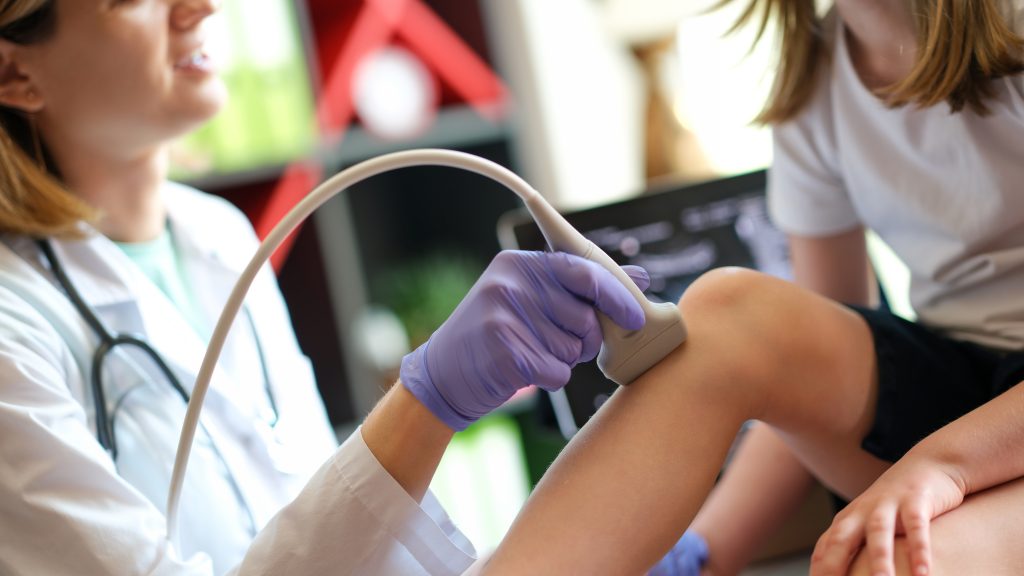
Imaging studies may include X-rays, ultrasound, or MRI to evaluate joint inflammation, damage, or changes that may not be visible on physical exam. MRI is especially useful for detecting early inflammation before structural damage occurs.
It is important for parents to understand that a normal blood test does not necessarily rule out a rheumatic condition. Some children with active JIA, for example, may have entirely normal inflammatory markers. The clinical evaluation by an experienced pediatric rheumatologist remains the most important part of the diagnostic process.

When Should a Parent Seek a Pediatric Rheumatology Evaluation?
Consider seeking a referral to a pediatric rheumatologist if your child experiences any of the following:
- Joint swelling that persists for more than six weeks without a clear cause
- Morning stiffness lasting 30 minutes or longer that improves with movement throughout the day
- Unexplained fevers combined with rash, joint pain, or fatigue
- Persistent fatigue that interferes with daily activities and is not explained by other causes
- A limp or change in movement patterns that develops gradually rather than after an injury
- Unexplained skin changes, including rashes, hardened patches, or discoloration
- Eye inflammation (uveitis) detected during a routine eye exam
- A family history of autoimmune conditions combined with new symptoms in the child
Early referral matters. Research shows that delays in JIA diagnosis are common, and earlier treatment is associated with better long-term outcomes, including reduced joint damage and a greater likelihood of achieving remission.
How Does Cure 4 The Kids Foundation Approach Pediatric Rheumatology?
At Cure 4 The Kids Foundation, the Pediatric Rheumatology Program provides expert, family-centered care for children and teens under the age of 18 living with autoimmune and inflammatory conditions. The program is led by Dr. Luciana Paim Marques, a pediatric rheumatologist with over 15 years of clinical practice.
The rheumatology team evaluates and manages a broad range of conditions, including juvenile idiopathic arthritis, childhood-onset lupus, juvenile dermatomyositis, vasculitis, scleroderma, and other connective tissue disorders. The program follows evidence-based treatment protocols and takes a multidisciplinary approach, connecting rheumatology patients with C4K’s full range of wraparound services, including on-site laboratory services, behavioral health support, physical therapy, and an integrated care team.
For families in Southern Nevada, having access to pediatric rheumatology close to home is significant. Pediatric rheumatologists are in short supply nationally. In fact, children with rheumatic disease travel an average of 57 miles to see a pediatric rheumatologist—more than double the travel distance typical for other pediatric subspecialties.
If your child is experiencing persistent joint pain, swelling, or other unexplained symptoms, our rheumatology team is ready to help your family understand what’s happening and what comes next. Talk with your child’s pediatrician about a referral, or contact us directly to learn more about how to get started.
Frequently Asked Questions About Pediatric Rheumatology
Can children get arthritis?
Yes. Arthritis is not limited to adults. Juvenile idiopathic arthritis is the most common chronic rheumatic disease in children, affecting an estimated 300,000 children in the United States. It can develop at any age during childhood, including in toddlers and infants.
What are the early signs of juvenile arthritis?
Early signs may include joint swelling (especially in the knees, wrists, or ankles), morning stiffness that improves throughout the day, limping or changes in movement, fatigue, and in some cases, eye inflammation that may not produce noticeable symptoms. Parents may also notice their child avoiding activities they previously enjoyed.
Are growing pains a sign of arthritis?
Typical growing pains are not a sign of arthritis. Growing pains tend to occur in both legs during the evening or at night, do not involve joint swelling, and resolve on their own. If a child’s pain involves visible swelling, occurs in a specific joint, lasts longer than six weeks, or interferes with daily function, it should be evaluated by a physician.
What causes juvenile arthritis?
The exact causes of juvenile idiopathic arthritis is not fully understood. It is an autoimmune condition, meaning the body’s immune system mistakenly attacks healthy tissue in the joints. Research suggests that a combination of genetic predisposition and environmental triggers may play a role, but there is no single gene or exposure that has been identified as the cause. JIA is not contagious, and it is not caused by anything a parent did or did not do.
Is lupus common in children?
Childhood-onset lupus is less common than JIA, affecting an estimated 5,000 to 10,000 children in the United States. However, it tends to be more severe when it begins in childhood, with a higher risk of kidney involvement and more active disease. Early diagnosis and coordinated care are especially important for children with lupus.

About the Author: Annette Logan-Parker brings over 30 years of experience in pediatric oncology to her role as Founder and Chief Advocacy & Innovation Officer at Cure 4 The Kids Foundation. She has dedicated her career to improving outcomes for children with cancer and ensuring equitable access to cutting-edge treatments for all families.